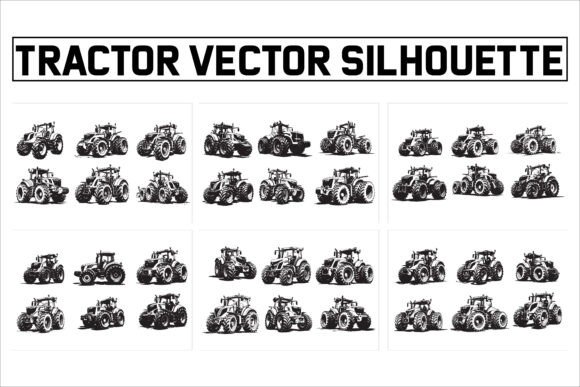
Review: Tractor Vector Silhouette Collection2 for Embroidery
As a designer who spends half my life digitizing and the other half staring at hoop marks on my kitchen table, I have learned that not every graphic translates well to thread. We often browse marketplaces looking for that perfect machine embroidery design, hoping it will elevate our next batch of custom apparel or home decor. Recently, I took a close look at the Tractor Vector Silhouette Collection2. This isn’t just about downloading a file; it is about understanding how these shapes behave when they meet fabric, needle, and bobbin thread.
The first impression of this collection is one of rustic reliability. The silhouettes are clean, bold, and instantly recognizable. For those of us in the Crafts sector, specifically those focusing on farmhouse aesthetics, rural themes, or agricultural heritage, these graphics hit the right note. They do not rely on excessive detail, which is a blessing for embroidery. Intricate vector lines often collapse into a mess of stitches if not carefully managed, but these silhouettes maintain their integrity. The mood is nostalgic yet modern, fitting seamlessly into today’s trend of minimalist, high-contrast design.
Real-World Application: The Custom Tote Bag Test
To truly evaluate the Tractor Vector Silhouette Collection2, I moved beyond the screen and into the studio. My test case was a set of heavy canvas tote bags intended for a local farmer’s market vendor. The goal was to create a durable, eye-catching logo that could withstand weekly washing and heavy loads. I selected one of the tractor profiles from the collection, aiming for a chest-sized placement on the bag’s front panel.
Working with silhouette-style Graphics requires a strategic approach to stitch types. Since these are solid shapes, I had to decide between a dense fill stitch or a combination of satin stitch borders with internal detailing. For the larger tractor bodies, a fill stitch provided the necessary coverage and weight. However, I paid close attention to stitch density. Too dense, and the fabric puckers; too sparse, and the backing shows through. The clean lines of the vector allowed me to adjust the density without losing the shape’s definition, resulting in a crisp, professional finish that looked intentional rather than accidental.
Versatility Across Products and Fabrics
One of the strongest assets of this collection is its adaptability. While my initial test was on canvas, I envisioned these designs on various other surfaces. For sweatshirt embroidery, the bold outlines work beautifully against the textured loop of fleece or French terry. The simplicity ensures the design doesn’t get lost in the fabric’s pile. Similarly, for baby embroidery projects like onesies or bibs, the lack of tiny, fragile details means the design holds up well to frequent laundering and rough handling by toddlers.
I also considered these vectors for embroidered patch creation. Patches require designs that can be cut cleanly after stitching. The distinct edges of the tractor silhouettes make them ideal candidates for merrowed edges or simple laser cutting. Whether you are an Etsy seller creating niche agricultural gifts or a small shop product developer branding workwear, these files offer a solid foundation. They serve as excellent design assets for creating printable mockup previews, allowing you to show clients exactly how the final piece will look before a single stitch is sewn.
Navigating Technical Challenges
However, practical design judgment requires acknowledging limitations. While the Tractor Vector Silhouette Collection2 is robust, it is not immune to the physics of embroidery. When working on stretchy fabrics, such as jersey knits for t-shirts, the large solid areas of a fill stitch can cause distortion. In these cases, using a high-quality cut-away stabilizer is non-negotiable. I also found that on dark fabrics, the contrast becomes critical. If you are stitching a dark tractor on a navy shirt, you lose the silhouette effect entirely. These designs thrive on contrast, so careful selection of thread colors is essential.
Another consideration is hoop size. Some of the wider tractor models may require a 5x7 or larger hoop to maintain proper scale without becoming too small to appreciate. If you are restricted to a 4x4 hoop, you must ensure the design scales down without losing its characteristic proportions. Additionally, curved surfaces like caps present a challenge. The flat nature of a silhouette can look distorted on a rounded crown unless properly digitized with pull compensation and adjusted for the cap’s curvature.
Enhancing Brand Value and Customer Trust
From a business perspective, the quality of your embroidery file directly impacts perceived value. A clean, well-stitched design signals professionalism. When customers receive a personalized gift or a piece of custom apparel featuring a sharp, recognizable image like these tractors, it builds trust in your brand. It suggests that you care about the details. For commercial embroidery projects, such as uniform branding for landscaping or farming companies, these silhouettes offer a dignified, industry-relevant aesthetic that resonates with the target audience.
The collection’s versatility also supports diverse marketing strategies. You can use these same files for holiday embroidery themes—perhaps adding a Santa hat to a tractor for Christmas—or for year-round home decor items like pillow covers and tea towels. This flexibility allows craft business owners to maximize their return on investment by repurposing one design across multiple product lines.
Practical Notes for the Designer
Before you commit to a full production run, I strongly advise testing the design on scrap fabric identical to your final material. Check how the running stitch underlay interacts with the fabric texture. Inspect the small details, such as wheel spokes or exhaust pipes, to ensure they do not become tangled nests of thread. It is also wise to test the design in black and white mockups to verify that the shape remains readable without color reliance.
Finally, always confirm the licensing terms. The product description notes that the Tractor Vector Silhouette Collection2 can be used in creative, commercial, and industrial projects, and includes EPS, SVG, JPG, and PNG files. However, as a responsible creator, you should verify whether these vector files are intended for direct use in embroidery software or if they require manual digitizing. Most embroidery machines do not read SVG or EPS files directly; they require DST, PES, or similar formats. Ensure you have the correct digital embroidery file format for your machine, or the skills to convert these vectors into stitch data properly.
In conclusion, this collection offers a strong, reliable resource for designers working within the rural, agricultural, or vintage niches. With careful attention to stabilizer choice, thread contrast, and stitch density, these silhouettes can elevate your finished product from homemade to handcrafted professional. They are a testament to the idea that sometimes, less detail allows for greater impact in the world of thread and fabric.